
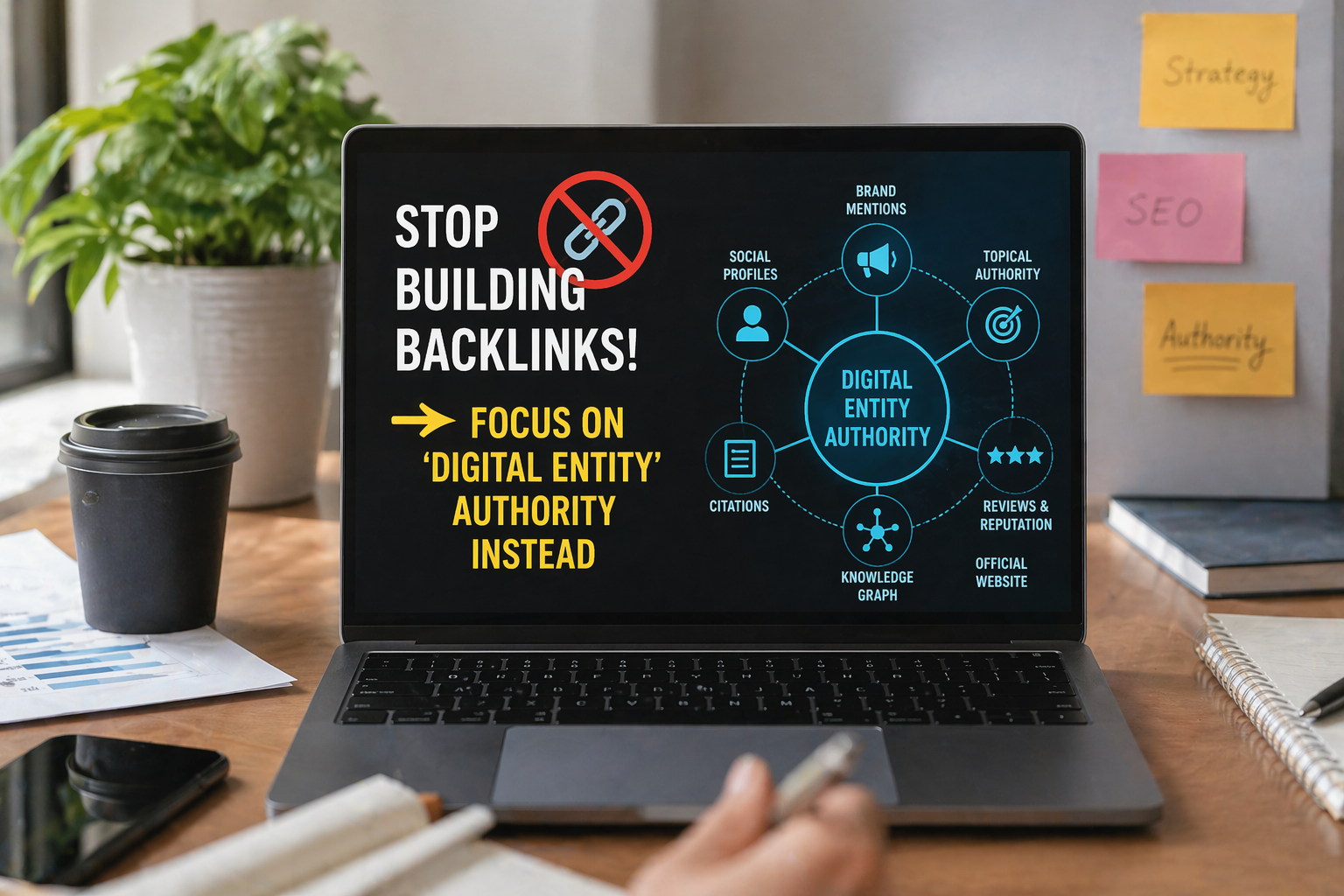
Stop Building Backlinks! Focus on ‘Digital Entity’ Authority Instead
In the rapidly evolving landscape of search, the old playbook of “more backlinks equals higher rankings” is officially outdated. As we navigate through 2026, the industry is witnessing a fundamental shift driven by the rise of Google AI SEO, where search engines have moved past simply counting links to understanding Entities, the real-world people, brands, and organizations behind the content. To stay competitive in a saturated market, businesses must pivot from superficial metrics to building deep-rooted digital authority.
The Evolution of Search: From Strings to Things
In the past, SEO was about “strings” (keywords). Today, it is about “things” (entities). Google’s Knowledge Graph now maps the relationship between your brand, your CEO, your location, and your niche expertise.
This is why modern Organic SEO services are no longer just about content production; they are about identity verification. Google needs to know exactly who you are before it decides to rank you. If your brand doesn’t exist as a verified entity in Google’s database, a thousand backlinks won’t save your rankings.
The Impact of Google AI SEO on Rankings
With the integration of Google AI SEO, search engines now prioritize “Information Gain.” AI models like Gemini and SGE are designed to find the most trustworthy answer, not just the most linked-to page.
AI-driven search analyzes the semantic connection between your website and industry-standard topics. If the AI perceives you as an authority, you become the “cited source” in AI Overviews. This shift is precisely why many businesses seeking Affordable SEO Services in USA are moving their budgets away from low-quality guest posting and toward comprehensive schema tagging and E-E-A-T (Experience, Expertise, Authoritativeness, and Trustworthiness) development.
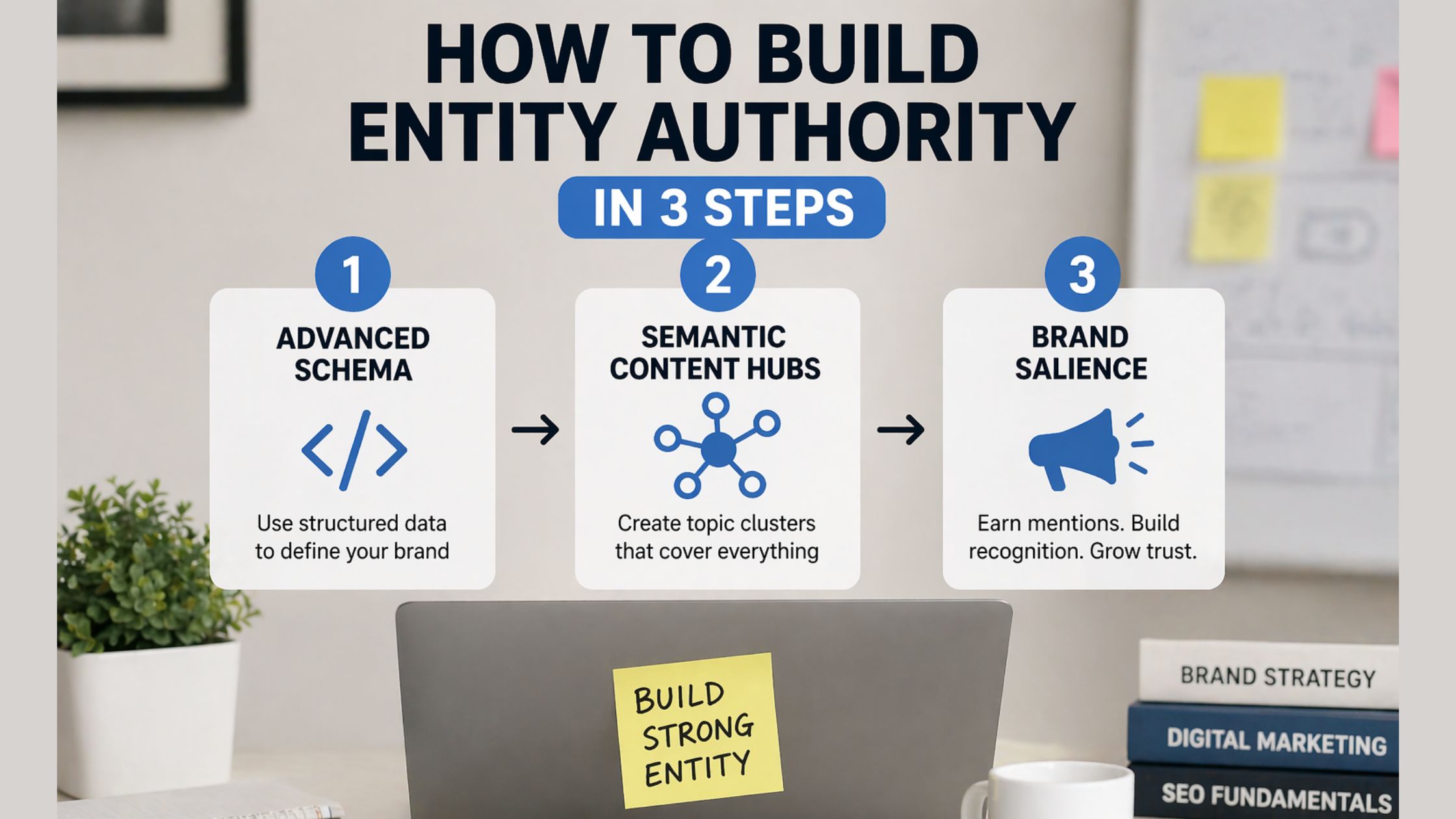
How to Build Entity Authority in 3 Steps
-
Advanced Schema Implementation: Use JSON-LD to define your organization, key personnel, and social profiles. This creates a “Connected Map” for search engines.
-
Semantic Content Hubs: Instead of chasing random keywords, dominate a single topic. Build clusters that answer every possible user intent within your niche.
-
Brand Salience: Focus on PR and mentions on high-authority news sites. When people search for your brand name directly, your entity strength skyrockets.
Frequently Asked Questions (FAQ)
Q1: Are backlinks completely useless now? No, but their role has changed. Backlinks now act as “validation” for an entity. A link from a relevant, high-authority site tells Google that your entity is trusted by other established entities.
Q2: How do I know if Google recognizes my brand as an entity? Try searching for your brand name. If a “Knowledge Panel” appears on the right side of the search results, or if Google suggests your brand in related searches, you are successfully being tracked as an entity.
Q3: How long does it take to build Entity Authority? Unlike buying a backlink, which can be instant, authority takes time. It usually takes 3 to 6 months of consistent, high-quality content and structured data implementation to see a significant shift in entity recognition.
The Bottom Line
The future of search is no longer a numbers game; it is a trust game. As the digital ecosystem becomes more crowded, the only way to ensure long-term visibility is by aligning your strategy with the nuances of Google AI SEO. Modern search requires a sophisticated balance of technical precision and brand credibility. At Triitans Solitaire, the focus has shifted toward these advanced semantic frameworks, ensuring that businesses don’t just rank for today, but remain authoritative figures in an AI-first world.